Team
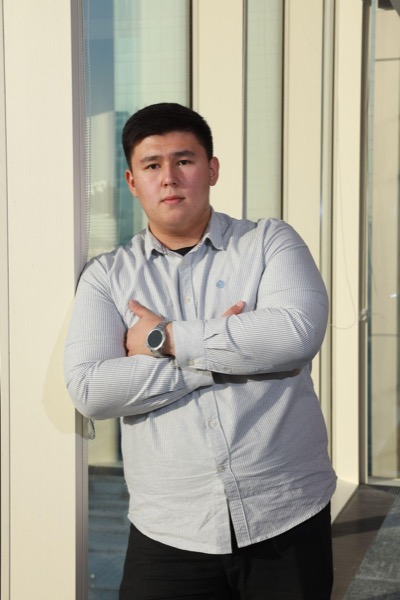
Abay Alikuly
Author of the idea
Author of the original concept and the first version of JanKómek.
ashyq qairymdylyq
JanKómek connects people in need with donors so that every tenge is visible from the diagnosis to the receipt.
Today fundraising in Kazakhstan runs mostly through social media, donation boxes in public places and scattered foundations. These channels often leave donors sceptical, because there is no transparency and no reliable guarantee.
The fraud rate per 100,000 people in Kazakhstan rose from 153 in 2017 to 227 in 2023 (up 48 percent), while the population grew by only 10 percent.
In 2023 fraud accounted for 30 percent of all registered criminal offences in the country. Source
In 2024 fraud became the most widespread type of crime in Kazakhstan: more than 45 thousand cases, 34 percent of all registered crime. Source
Losses from online fraud reached 11.4 billion tenge in 2024, 2.8 times more than in 2023. Victims recovered only 36.6 percent of what was taken. Source
Over 11 months of 2025, 26.3 thousand cases of online fraud were registered, a record: 20.3 percent more than in the same period of 2024 and 3.4 times more than in all of 2019. Source
In the first half of 2026 the Prosecutor General's Office reported crime down 10 percent and fraud down 13 percent, driven by higher clearance rates rather than by transparency in fundraising itself: in 2025 the share of charity fraud cases with no identified perpetrator was still 54.3 percent. Source
People in need are left without help, and mistrust reduces the willingness of people to support one another.
A rising caseload of fraud diverts resources from other work and overloads the court system.
Extra cost of transaction screening, customer churn, and the risk of being drawn into fraudulent schemes.
Mistrust in fundraising is not unique to Kazakhstan, and the model of transparent, verified aid has already been proven at UN level.
Kazakhstan ranked 30th out of 101 in the CAF World Giving Report 2025 by share of personal income given to charity (1.21 percent), ahead of the United States, Saudi Arabia and Singapore. Source
Fundraising fraud is not unique to Kazakhstan either: 34 percent of UK charities faced fraud during 2025 and only 32 percent recovered what they lost. Source
The UN World Food Programme already runs Building Blocks, a blockchain platform for cash transfers to refugees, together with UN Women: any participant in the network sees the balance and where aid went in real time. The newer WFP initiative Food For Crisis lets a donor see how their contribution turns into actual food on the ground, a logic close to the JanKómek spending record. Source
The roadmap starts from what can be done without access to state databases and moves towards formal partnerships as they become available. Wide adoption of a platform like this depends on the digitalisation of state systems and on reliable database integration. Without that, verification stays manual and does not scale beyond individual foundations.
Stage 1
Need verification
The applicant attaches documents (diagnosis and treatment estimate, hardship certificate, an act from the local authority). Official electronic documents from eGov are checked by digital signature. Everything else is confirmed by a platform curator or a partner foundation, which is named publicly as the source of verification.
Stage 2
A dedicated account instead of a personal card
Donations are accepted through the Unified QR, Kaspi Pay and Halyk epay, credited directly to the dedicated account of the beneficiary or an accredited foundation. The platform holds no fundraising account of its own.
Stage 3
Spending oversight
Every expense is backed by a receipt and visible to donors, the public and the press. As state systems mature: direct verification of beneficiary status through the population database and the Committee for Labour and Social Protection.
The platform takes no money out of the campaigns. Every donation goes straight to the dedicated account of the beneficiary or an accredited foundation, with nothing deducted to run the platform itself.
Philanthropists, sponsors and international charitable foundations, kept separate from the donor money raised for beneficiaries.
The state, state-owned and quasi-state companies. A deliberate decision, taken for the sake of independence and trust.
JanKómek is not reinventing crowdfunding. We build on the strengths of proven global models and try not to repeat their weak points.
The table scrolls sideways.
| Platform | Fees | Verification | Spending transparency |
|---|---|---|---|
| GoFundMe | 2.9 percent + $0.30, plus a default tip of 14 to 16.5 percent to the platform | After the fact, anyone can publish a campaign instantly | Optional text updates from the organiser |
| Watsi | 0 percent (platform costs are paid separately by philanthropic donors) | Before publication, through partner medical facilities | A public document for every transaction, photo confirmation of treatment |
| GlobalGiving | 5 to 12 percent + 3 percent payment processing | Before publication, legal documents and audit, re-vetting every 2 years | Mandatory quarterly project reports |
| Nuzhna Pomoshch | No mandatory fee, voluntary contributions of 5 to 25 percent | Before listing, with emphasis on NGO reputation and open reporting | A public directory of vetted NGOs with reporting |
| JanKómek | 0 percent, funded separately by philanthropists and sponsors | Before publication, diagnosis and estimate or proof of hardship | A mandatory spending record for every campaign: receipt, supplier, date |
The closest model to ours is Watsi: verification before publication and full transparency with no fee charged to the donor. Watsi · GlobalGiving · «Нужна помощь»
The partnerships below are directions in which we are seeking cooperation, not agreements already signed.
Local authorities, the Committee for Labour and Social Protection, e-government operators, to confirm beneficiary status and for future integration with the population database.
A partnership to accept donations through the Unified QR, Kaspi Pay and Halyk epay directly into dedicated accounts, without passing through a platform account.
Accredited foundations as guarantors of campaign verification and as recipients of platform support.
Abay Alikuly
Author of the idea
Author of the original concept and the first version of JanKómek.